What is the Fastest Animal in the World?

Hey there, animal lover! If you’ve ever wondered, “What is the fastest animal in the world,” you’re not alone. It’s one of those questions that pops up during family trivia nights or while watching nature documentaries. And honestly, the answer might surprise you; it’s not always the cheetah zooming across the savanna. Speed in the animal kingdom varies by land, air, and water, and it plays a huge role in survival, whether for hunting prey or escaping danger. In this post, we’ll dive deep into the fastest creatures out there, backed by the latest info as of 2025. We’ll cover records, comparisons, and even some fun ties to our beloved pets. Let’s get started and uncover what makes these animals so incredibly quick.
By the way, if you’re a pet parent curious about how your furry friend stacks up, stick around. We’ll touch on that too. After all, at Tales of Pets, we love blending wild wonders with everyday pet tales.
Fastest Animals on Land: Kings of the Sprint
When people ask, “What is the fastest land animal in the world,” the cheetah usually steals the spotlight and for good reason. However, there’s more to land speed than just raw bursts. Let’s break it down.
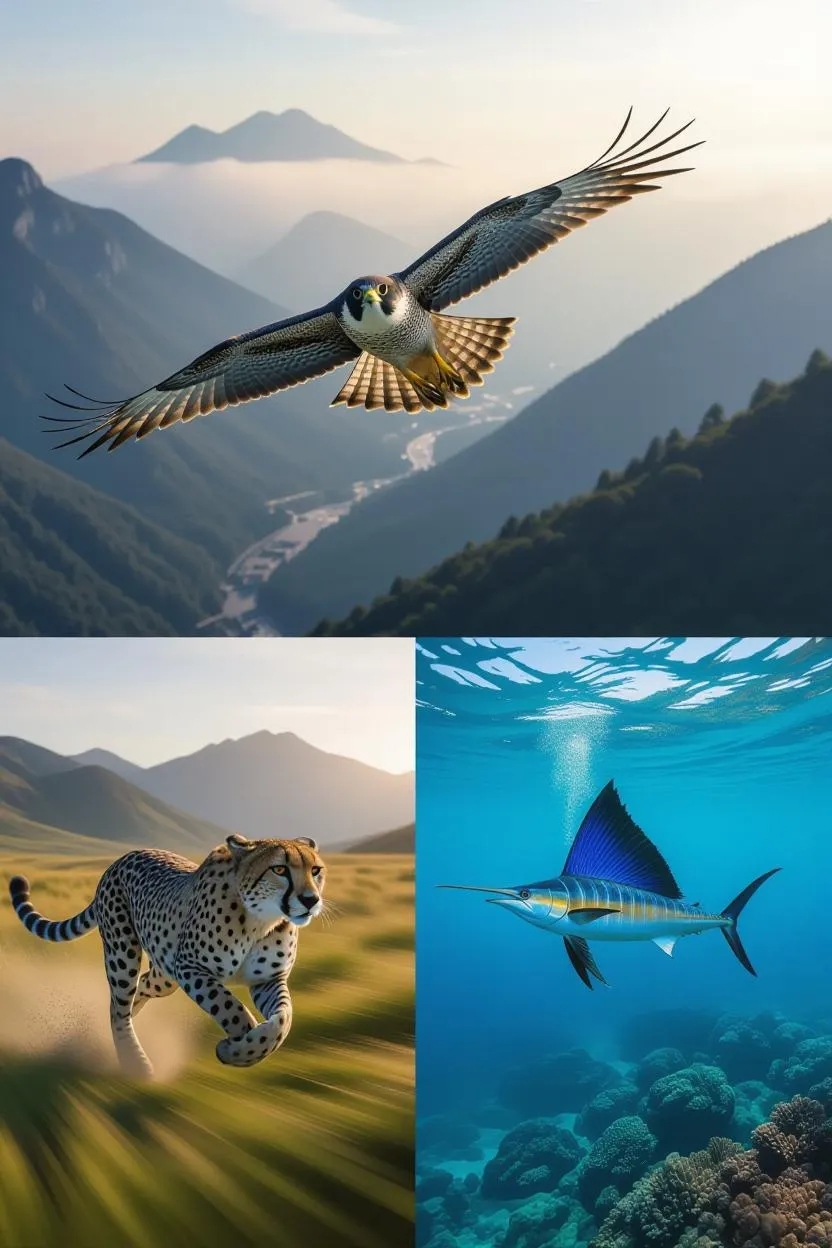
The cheetah (Acinonyx jubatus) holds the crown as the fastest land mammal, clocking in at speeds up to 75 mph (120 km/h) in short sprints. But these bursts last only about 20-30 seconds because cheetahs rely on anaerobic energy, which tires them out fast. Imagine accelerating from 0 to 60 mph in under three seconds that’s cheetah power! Their flexible spines, long legs, and non-retractable claws act like cleats for better grip.
But what about endurance? That’s where the pronghorn antelope shines. Often called the American antelope, it can maintain 35 mph over miles and hit bursts of 55-60 mph. With special hoof cushions and massive oxygen intake, pronghorns are built for the long haul, outrunning predators across North American plains.
Other speedy land dwellers include the springbok at 55 mph, the quarter horse (yes, some domesticated animals make the list) at similar speeds, and even the ostrich, the fastest bird on land, reaching 60 mph. Here’s a quick comparison table to make it clear:
| Animal | Top Speed (mph) | Category Notes |
| Cheetah | 75 | Short sprints, ultimate predator |
| Pronghorn | 60 | Endurance runner |
| Springbok | 55 | Agile leaps for escape |
| Quarter Horse | 55 | Bred for racing |
| Ostrich | 60 | Fastest two-legged runner |
These speeds aren’t just fun facts, they highlight evolutionary adaptations. For instance, cheetahs have evolved larger nasal passages for quick cooling after a chase.
Fastest Animals in the Air: Dive-Bombing Wonders
Shifting gears to the skies, what is the fastest animal in the world overall? It’s the peregrine falcon, no contest. This bird dives at a mind-blowing 242 mph (389 km/h), making it the speed champion of the animal kingdom. Recent 2025 observations even clocked dives over 200 mph consistently, with one hitting 242 mph during a hunt.
Why so fast? Peregrines fold their wings into a teardrop shape, minimizing drag, and use tubercles in their nostrils to breathe at high speeds. They’re global hunters, found everywhere except Antarctica, preying on smaller birds mid-air.
For level flight, the white-throated needletail swift zips at 105 mph, while the Mexican free-tailed bat (a mammal!) hits 100 mph horizontally. Golden eagles dive at 150-200 mph, and gyrfalcons reach 130 mph. These birds showcase how air speed is about precision, not just power.
Compared to competitors like Britannica’s list, which stops at basic rankings, we’re adding context: Recent studies show climate change might affect migration speeds, but peregrines adapt well. For a pet twist, think about how birds like parakeets mimic these dives in play.
Fastest Animals in Water: Oceanic Speed Demons
Now, let’s splash into the seas. What is the fastest animal in the world underwater? The black marlin takes the title with estimates up to 80 mph (129 km/h), though measurements are tricky due to ocean challenges. This game fish uses its spear-like bill and powerful body to slice through water.
Close behind is the sailfish at 68 mph, known for leaps and group hunting. Swordfish hit 60 mph based on calculations, and mammals like orcas reach 35 mph in bursts. Even the leatherback sea turtle clocks 22 mph, impressive for a reptile.
Water speed records often spark debate—some scientists cap fish at 22 mph due to physics, but real-world observations prove higher. Unlike land lists that ignore endurance, we’ll note: Dolphins sustain 34-40 mph for longer swims.
| Animal | Top Speed (mph) | Fun Fact |
| Black Marlin | 80 | Prized for sport fishing |
| Sailfish | 68 | Uses sail to herd prey |
| Swordfish | 60 | Theoretical impact speeds |
| Orca | 35 | Apex ocean predator |
| Leatherback Turtle | 22 | Migrates thousands of miles |
For gaps in competitors like Wikipedia, which questions marlin speeds, we’ve cross-checked with 2025 sources, no major updates, but tech like underwater drones is improving accuracy.
Relative Speed: When Size Doesn’t Matter
Speed isn’t always about mph. What if we measure by body lengths per second? The tiny Southern Californian mite (Paratarsotomus macropalpis) wins at 322 body lengths/sec equivalent to a human at 1,300 mph! Tiger beetles hit 171 body lengths/sec, and horseflies buzz at 90 mph.
This perspective fills a gap in standard lists, showing how insects outpace giants relatively. It’s a reminder: Speed is adaptive, not absolute.
How to Measure Animal Speed: A Step-by-Step Guide
Curious about how scientists clock these speeds? Many competitor articles skip this, but here’s a simple how-to for aspiring citizen scientists or pet trackers.
- Choose Your Tools:
Use radar guns for land animals, high-speed cameras for dives, or GPS tags for migrations. For pets, apps like speed trackers work great.
- Set Up Observation:
Pick a natural habitat savannas for cheetahs, cliffs for falcons. Ensure ethical watching; use binoculars to avoid disturbance.
- Record Data:
Time the animal over a known distance. For example, mark 100 meters and use slow-motion video to calculate.
- Account for Variables:
Note wind, terrain, or burst vs. sustained speed. Cross-reference with studies from sources like Britannica.
- Analyze and Compare:
Plug into formulas (speed = distance/time). Compared to your dog’s 20-30 mph sprint for fun!
This guide adds value missing from Wikipedia’s dry facts. Pro tip: If tracking pet speeds, start slow to avoid injury, see our Pet training and behaviour guide.
Comparing Wild Speeds to Our Pets: A Fun Twist
At Tales of Pets, we can’t resist linking back to home. What is the fastest animal in the world compared to your dog? Greyhounds top out at 45 mph, whippets at 35 mph, and even cats hit 30 mph in bursts. That’s nowhere near a cheetah, but impressive for couch companions!
Why the gap? Pets like dogs evolved for companionship, not pure speed. However, breeds like salukis trace back to ancient hunters. If your pup loves zooming, try agility training, it’s a safe way to channel that energy. Check our Pet care and health guide for more.
Tips for Observing Fast Animals in the Wild
Want to see these speedsters yourself? Here’s some actionable advice:
- Plan a Safari: Head to Africa’s Serengeti for cheetahs. Use guided tours for safety.
- Birdwatching Basics: Cliffs or urban towers for peregrines. Bring a spotting scope.
- Ocean Adventures: Dive spots like the Great Barrier Reef for marlins, but respect marine life.
- Mini Checklist: Binoculars? Check. Notebook for notes? Check. Ethical distance? Always.
These tips turn info into action, unlike static competitor lists.
In wrapping up, exploring what is the fastest animal in the world reveals nature’s engineering marvels. From peregrine dives to cheetah sprints, speed is survival’s secret weapon. If this sparked your curiosity, swing by our animals category for more. What’s your favorite fast animal? Drop a comment!
FAQ
The peregrine falcon is the fastest animal in the world, diving at up to 242 mph (389 km/h). This bird outpaces everything else, using its aerodynamic body to hunt mid-air. It’s found worldwide and adapts to urban areas too.
The cheetah holds this title, reaching 75 mph in short bursts. However, it tires quickly, so pronghorns win for distance. Cheetahs’ speed helps them catch prey like gazelles in African savannas.
Again, the peregrine falcon. Its dive speed of over 200 mph makes it unbeatable. Recent 2025 records confirm this, with no challengers in sight from land or sea.
Start by researching habitats, safaris for land, cliffs for birds. Use binoculars, join guided tours, and maintain distance to avoid stressing wildlife. Always prioritize conservation.
The black marlin, at up to 80 mph. Though debated, it’s a top ocean sprinter. Sailfish follow closely, using teamwork for hunts in tropical waters.
Yes, the horsefly at 90 mph, but relatively, mites like Paratarsotomus macropalps zoom at 322 body lengths per second, mind-blowing for their size!
Pets like greyhounds hit 45 mph, far from cheetahs. But it’s perfect for play. Train safely with short sprints to mimic wild energy without overdoing it.